

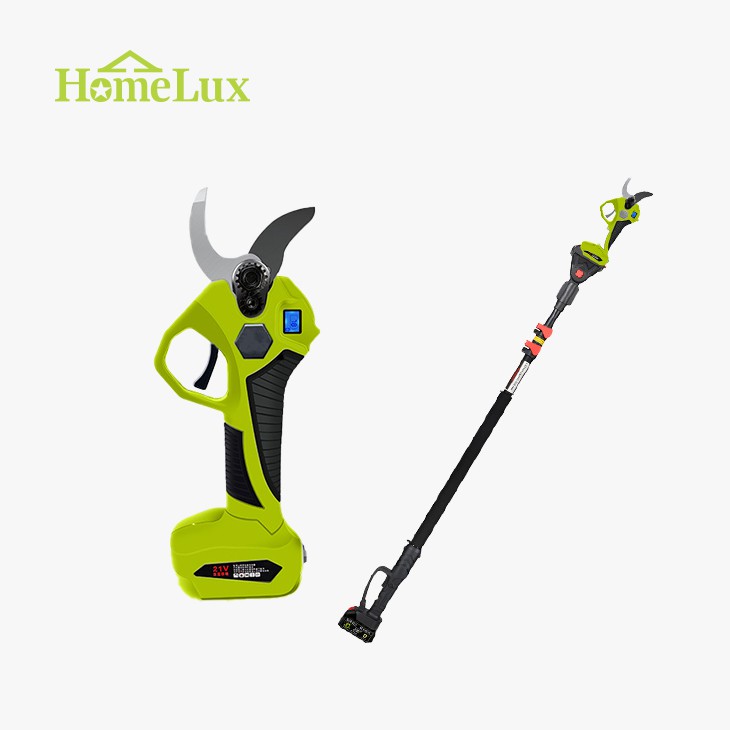
Using lithium pruning shears in wet conditions is a common concern among gardeners and landscapers. As a supplier of Rechargeable Garden Shears, Lithium Pruning Shears, and Cordless Electric Pruning Shears, I understand the importance of providing clear information on the safe and effective use of our products.

Understanding the Risks
First and foremost, it's crucial to understand the potential risks associated with using lithium pruning shears in wet conditions. Water is an excellent conductor of electricity, and when combined with electrical components, it can lead to short - circuits, electrical shocks, and damage to the tool.
The lithium - ion batteries that power these pruning shears are sensitive to moisture. If water seeps into the battery compartment, it can cause corrosion of the battery contacts, which may reduce the battery's performance and lifespan. In extreme cases, it can even lead to a battery failure or a dangerous chemical reaction.
The electrical motor in the pruning shears is also at risk. Water can cause the motor's windings to short - circuit, leading to a complete breakdown of the tool. Additionally, the moving parts of the shears, such as the blades and gears, can be damaged by water. Rust can form on the metal components, which not only affects the shears' cutting performance but also reduces their durability.
Manufacturer's Recommendations
Most manufacturers of lithium pruning shears explicitly state in their user manuals that the tools should not be used in wet conditions. These recommendations are based on extensive testing and safety standards. Using the shears contrary to these instructions can void the warranty, leaving you responsible for any repair or replacement costs.
However, some high - end models are designed with enhanced water - resistance features. These shears often have sealed battery compartments and motors, as well as water - resistant coatings on the external parts. But even for these models, it's important to note that "water - resistant" does not mean "waterproof." They can withstand light splashes or brief exposure to moisture, but submerging them in water or using them in heavy rain is still not recommended.
Safe Alternatives
If you need to prune plants when they are wet, there are some safe alternatives. You can wait for the plants to dry. This may take a few hours or even a day, depending on the weather conditions. If you're in a hurry, you can use a dry cloth to wipe the plants' branches before pruning.
Another option is to use manual pruning shears. These traditional tools do not rely on electricity, so they are not affected by wet conditions. They are also lightweight and easy to use for small - scale pruning tasks.
Maintenance After Exposure to Moisture
If your lithium pruning shears accidentally get wet, it's important to take immediate action to prevent damage. First, turn off the tool and remove the battery. Use a dry cloth to wipe away as much water as possible from the exterior of the shears.
For the battery, carefully dry the contacts with a clean, dry cloth. If the battery has been exposed to a significant amount of water, it's advisable to let it dry in a well - ventilated area for at least 24 hours before attempting to use it again.
For the shears themselves, you can use a can of compressed air to blow out any water that may have gotten into the hard - to - reach areas. After that, apply a light coat of lubricant to the moving parts to prevent rust.
Exceptions and Special Considerations
In some commercial or professional gardening settings, there may be situations where waiting for the plants to dry is not practical. In such cases, if you must use lithium pruning shears in slightly damp conditions, take extra precautions.
Wear rubber gloves to protect yourself from electrical shocks. Make sure the shears are in good working condition before use, and inspect them regularly during the pruning process. If you notice any signs of malfunction, such as a decrease in cutting power or strange noises, stop using the shears immediately.
Long - Term Effects on Performance
Repeated use of lithium pruning shears in wet conditions can have long - term effects on their performance. As mentioned earlier, rust and corrosion can form on the metal components, which can lead to increased friction and reduced cutting efficiency. The electrical components may also degrade over time, resulting in a shorter battery life and more frequent breakdowns.
The cutting blades of the shears are particularly affected. Rust on the blades can cause them to become dull more quickly, requiring more frequent sharpening. A dull blade not only makes pruning more difficult but can also damage the plants by crushing the branches instead of making a clean cut.
Importance of Proper Storage
Proper storage is also crucial, especially if your pruning shears have been exposed to moisture. After using the shears, clean them thoroughly to remove any dirt, debris, and moisture. Store them in a dry place, preferably in a toolbox or a storage case. This helps to protect the shears from further exposure to moisture and dust, which can also cause damage.
Conclusion
In conclusion, using lithium pruning shears in wet conditions is generally not recommended due to the significant risks involved. These risks include damage to the battery, motor, and moving parts, as well as the potential for electrical shocks. While some models may have enhanced water - resistance, it's still important to follow the manufacturer's instructions.
If you're in the market for a new pair of pruning shears, consider your gardening needs carefully. If you often work in damp environments, you may want to invest in a high - quality, water - resistant model. But always remember that safety should be your top priority.
If you have any questions about the use, maintenance, or purchase of our Rechargeable Garden Shears, Lithium Pruning Shears, or Cordless Electric Pruning Shears, we're here to help. We welcome you to reach out to us for more information and to discuss your specific requirements. Whether you're a professional landscaper or a home gardener, we can provide you with the right tools for the job.
References
- Various user manuals of lithium pruning shears.
- Gardening and tool safety standards and guidelines.
- Technical research on the effects of moisture on electrical tools and batteries.


