

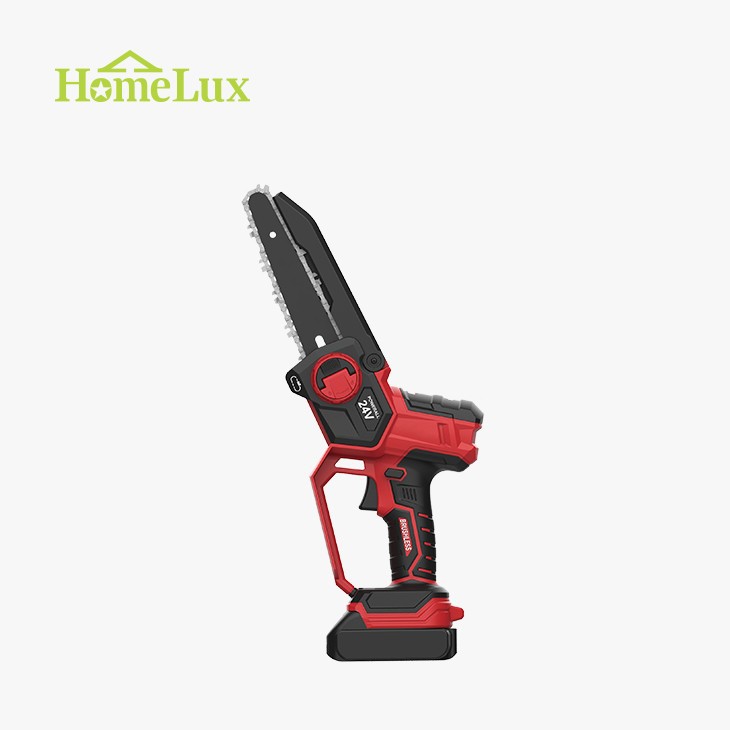
Preventing chain derailment on a brushless electric chainsaw is crucial for both safety and the efficient operation of the tool. As a supplier of high - quality brushless electric chainsaws, including Lithium Battery Chainsaw, Cordless Brushless Chainsaw, and Cordless Handheld Chainsaw, I understand the importance of this issue. In this blog, I'll share some professional insights on how to prevent chain derailment.

1. Regular Maintenance
- Cleaning
One of the most basic yet important steps in preventing chain derailment is regular cleaning. Sawdust, debris, and resin can accumulate on the chainsaw's chain, bar, and sprocket over time. This buildup can cause uneven movement of the chain, increasing the risk of derailment. Every time you finish using the chainsaw, make sure to clean it carefully. Use a brush to remove the sawdust and debris from the chain and bar. For stubborn resin, a specialized chain cleaner can be used. - Lubrication
Proper lubrication is essential for the smooth operation of the chain. The chain and bar need to be lubricated regularly to reduce friction. Most modern brushless electric chainsaws are equipped with an automatic oiling system. However, it is still necessary to check the oil level before each use. If the oil level is low, refill it with the recommended chainsaw bar and chain oil. Insufficient lubrication can lead to increased wear and tear on the chain, bar, and sprocket, which in turn can cause the chain to derail. - Chain Tension Adjustment
Maintaining the correct chain tension is perhaps the most critical factor in preventing chain derailment. A chain that is too loose can easily jump off the bar, while a chain that is too tight can cause excessive wear on the chain and bar, and may even damage the saw's motor. To check the chain tension, first, make sure the chainsaw is turned off and unplugged (or the battery is removed). Then, pull the chain up slightly in the middle of the bar. A properly tensioned chain should have about 1/4 - inch of slack. If the chain is too loose or too tight, use the tension adjustment screw on the chainsaw to adjust it.
2. Correct Usage
- Proper Cutting Techniques
Using the chainsaw correctly is vital to prevent chain derailment. When cutting, always keep the chainsaw steady and avoid making sudden or jerky movements. Do not force the chainsaw through the wood. Let the chain do the work at its own pace. If you try to push the chainsaw too hard, the chain may bind or get stuck, increasing the risk of derailment. Also, make sure to cut with the full length of the bar, not just the tip. Cutting with the tip can cause the chain to come off the bar. - Avoid Overloading
Overloading the chainsaw can cause the chain to derail. Do not attempt to cut materials that are too large or too hard for the chainsaw's capacity. Each chainsaw has a recommended maximum cutting diameter. Make sure to stay within this limit. If you need to cut larger materials, use a more powerful chainsaw or cut the material in smaller pieces first. - Cutting at the Right Angle
Cutting at an improper angle can also lead to chain derailment. When making a cut, try to keep the bar as perpendicular to the wood as possible. Avoid cutting at extreme angles, especially when the chain is under heavy load. If you need to make angled cuts, do it slowly and carefully, and make sure the chain is running smoothly.
3. Inspection
- Pre - use Inspection
Before each use of the chainsaw, conduct a thorough inspection. Check the chain for any signs of damage, such as broken or dull teeth. A damaged chain is more likely to derail. Also, inspect the bar for any cracks or damage. A damaged bar can cause the chain to run unevenly. Check the sprocket to ensure that it rotates freely and is not worn or damaged. - Post - use Inspection
After using the chainsaw, inspect it again. Look for any signs of wear or damage that may have occurred during use. Check the chain tension again, as it may have changed during the cutting process. If you notice any issues, address them immediately before the next use.
4. Quality Equipment
- Choosing the Right Chain
Using a high - quality chain that is specifically designed for your brushless electric chainsaw is essential. A cheap or incompatible chain may not fit properly on the bar and sprocket, increasing the risk of derailment. Make sure to choose a chain with the correct pitch, gauge, and number of drive links. The pitch is the distance between the drive links, the gauge is the thickness of the drive links, and the number of drive links determines the length of the chain. - Bar and Sprocket Compatibility
The bar and sprocket of the chainsaw should also be compatible with each other and with the chain. A mismatched bar or sprocket can cause the chain to run unevenly and increase the likelihood of derailment. When purchasing a chainsaw, make sure to get a bar and sprocket set that is recommended by the manufacturer for the specific model of the chainsaw.
5. Training
- Operator Training
Proper training for the chainsaw operator is crucial. An inexperienced operator may not use the chainsaw correctly, increasing the risk of chain derailment and other accidents. Training should include how to start and stop the chainsaw safely, how to adjust the chain tension, how to lubricate the chain and bar, and how to use the chainsaw for different cutting tasks. Many manufacturers offer training programs for their chainsaw users.
As a supplier, I am committed to providing you with high - performance brushless electric chainsaws and useful advice on their maintenance and operation. If you are interested in purchasing our Lithium Battery Chainsaw, Cordless Brushless Chainsaw, or Cordless Handheld Chainsaw, or if you have any questions about preventing chain derailment or chainsaw operation in general, please feel free to contact us. We look forward to discussing your needs and providing you with the best solutions.
References
- Chainsaw Safety Manuals from major manufacturers
- Industry - standard guides on chainsaw maintenance and operation


