

In the realm of gardening and outdoor maintenance, a lightweight cordless blower has emerged as an indispensable tool. As a supplier of these innovative devices, I am often asked about the power consumption of a lightweight cordless blower. In this blog, I will delve into this topic, exploring the factors that influence power consumption, how it impacts the performance of the blower, and what users can expect in terms of energy efficiency.
Understanding Power Consumption Basics
Power consumption is typically measured in watts (W). It represents the rate at which an electrical device uses energy. For a lightweight cordless blower, power consumption is a crucial factor as it directly relates to the battery life and the overall runtime of the tool. A higher power consumption means the blower uses more energy per unit of time, which can lead to a shorter battery life.
However, power consumption is not the only determinant of a blower's performance. Other factors such as air volume, airspeed, and the design of the blower's motor also play significant roles. A blower with a higher power consumption may not necessarily be more effective if it fails to convert that energy into useful work, such as moving leaves or debris efficiently.
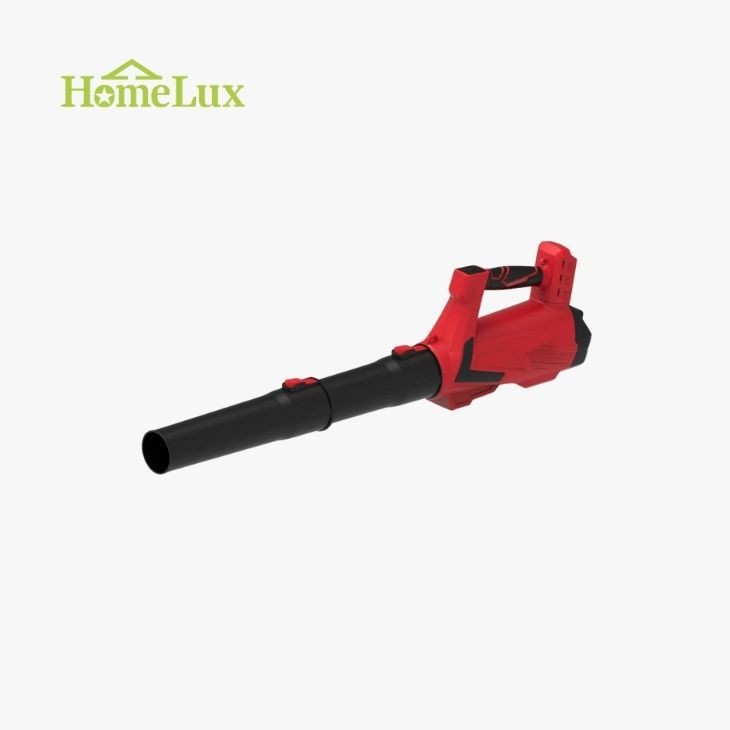

Factors Influencing Power Consumption
Several factors can influence the power consumption of a lightweight cordless blower. These include the motor type, the speed settings, the load on the blower, and the battery voltage.
- Motor Type: The motor is the heart of the blower, and different types of motors have different power requirements. Brushless motors, for example, are generally more energy - efficient than brushed motors. They convert a higher percentage of electrical energy into mechanical energy, resulting in lower power consumption for the same level of performance. As a supplier, we often recommend brushless motor blowers to our customers due to their energy - saving advantages.
- Speed Settings: Most lightweight cordless blowers come with multiple speed settings. Higher speed settings typically require more power as the motor has to work harder to generate a greater volume of air at a higher velocity. When using the blower on a lower speed setting, the power consumption is reduced, which can extend the battery life. For light tasks such as blowing away dust or small leaves, using a lower speed setting is not only sufficient but also more energy - efficient.
- Load on the Blower: The load on the blower refers to the amount of resistance the blower has to overcome to move air. If the blower is used to clear a large pile of wet leaves or heavy debris, it will require more power compared to blowing away light, dry leaves. The motor has to work harder to generate enough air pressure to move the heavier load, resulting in increased power consumption.
- Battery Voltage: The voltage of the battery also affects power consumption. Higher voltage batteries can provide more power to the motor, allowing the blower to operate at higher speeds and with greater force. However, this also means that the power consumption will be higher. For example, a 20V Cordless Blower may consume more power than a 12V blower, but it can also deliver better performance for more demanding tasks.
Measuring Power Consumption
To measure the power consumption of a lightweight cordless blower, we can use a power meter. A power meter is a device that can be connected between the battery and the blower to measure the amount of power being consumed. By using a power meter, we can accurately determine the power consumption at different speed settings and under various load conditions.
In our experience as a supplier, we have found that the power consumption of a typical lightweight cordless blower can range from around 50W to 200W, depending on the factors mentioned above. For example, a blower with a brushless motor operating on a low - speed setting may consume around 50W, while a high - power blower with a brushed motor operating at full speed may consume up to 200W.
Impact of Power Consumption on Battery Life
The power consumption of a lightweight cordless blower has a direct impact on the battery life. The battery life is the amount of time the blower can operate on a single charge. A higher power consumption means that the battery will be drained more quickly, resulting in a shorter runtime.
To calculate the approximate battery life, we can use the following formula: Battery Life (in hours)=Battery Capacity (in watt - hours)/Power Consumption (in watts). For example, if a blower has a power consumption of 100W and the battery has a capacity of 200 watt - hours, the approximate battery life will be 2 hours.
As a supplier, we understand the importance of battery life for our customers. That's why we offer a range of blowers with different battery capacities and power consumption levels to meet the diverse needs of our customers. For customers who need to use the blower for extended periods, we recommend choosing a blower with a lower power consumption and a higher - capacity battery.
Energy Efficiency and Performance
Energy efficiency is an important consideration when choosing a lightweight cordless blower. An energy - efficient blower not only saves energy but also reduces the overall cost of ownership. A blower that can deliver high performance with low power consumption is the ideal choice for most users.
Our Cordless Blower For Leaves and Powerful Cordless Leaf Blower models are designed with energy efficiency in mind. They feature advanced motor technology and optimized airflow designs to ensure that they can perform effectively while consuming less power.
Choosing the Right Blower Based on Power Consumption
When choosing a lightweight cordless blower, it's important to consider your specific needs and usage patterns. If you only need to use the blower for light tasks such as clearing a small patio or driveway, a blower with a lower power consumption and a smaller battery may be sufficient. On the other hand, if you have a large garden or need to clear heavy debris, you may need a more powerful blower with a higher power consumption and a larger - capacity battery.
As a supplier, we are always ready to provide our customers with professional advice on choosing the right blower based on their needs. We can help you understand the power consumption, battery life, and performance of different models to ensure that you make an informed decision.
Conclusion
In conclusion, the power consumption of a lightweight cordless blower is influenced by several factors, including the motor type, speed settings, load on the blower, and battery voltage. It has a direct impact on the battery life and the overall performance of the blower. As a supplier, we are committed to providing our customers with high - quality, energy - efficient blowers that meet their diverse needs.
If you are interested in purchasing a lightweight cordless blower or have any questions about power consumption, performance, or battery life, please feel free to contact us for a procurement discussion. We look forward to working with you to find the perfect blower for your outdoor maintenance needs.
References
- "Handbook of Electric Power Systems" by John G. Kassakian, Marc Schlecht, and George C. Verghese
- "Power Electronics: Converters, Applications, and Design" by Ned Mohan, Tore M. Undeland, and William P. Robbins


