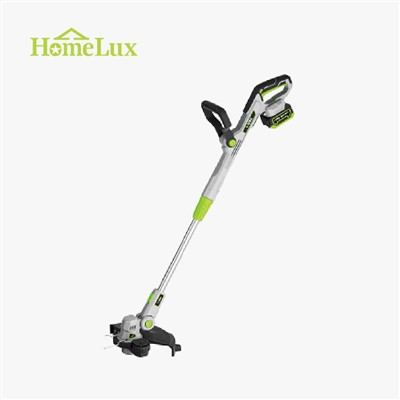
Hey there, fellow garden enthusiasts! As a supplier of Brushless Cordless String Trimmer, I often get asked about the recommended string thickness for these handy tools. Today, I'm gonna break it down for you and share some insights to help you make the best choice for your trimming needs.
Why String Thickness Matters
First off, let's talk about why string thickness is such a big deal. The thickness of the trimmer line directly affects its cutting performance, durability, and the types of vegetation it can handle. A thicker string is generally more robust and can cut through tougher grass, weeds, and even small branches. On the other hand, a thinner string is more flexible and better suited for lighter trimming tasks, like edging around flower beds or trimming fine grass.


Factors to Consider When Choosing String Thickness
Type of Vegetation
The type of vegetation you'll be trimming is one of the most important factors to consider. If you have a large yard with thick, overgrown grass and weeds, you'll need a thicker string to get the job done efficiently. For example, a 0.095 - 0.110 - inch string is a great choice for heavy - duty trimming. It can power through thick grass and small weeds without breaking easily.
On the flip side, if you're just maintaining a well - kept lawn or doing some light edging, a thinner string like 0.065 - 0.080 inches will work just fine. It's more precise and less likely to damage delicate plants or flowers.
Trimmer Power
The power of your brushless cordless string trimmer also plays a role in determining the appropriate string thickness. More powerful trimmers can handle thicker strings without losing speed or torque. Our Brushless Cordless String Trimmer is designed to be powerful and efficient, so it can support a range of string thicknesses. However, if you have a less powerful trimmer, using a very thick string might cause it to overheat or lose performance.
Desired Cutting Speed
Thicker strings generally cut more slowly than thinner strings because they require more power to rotate. If you're in a hurry to get your trimming done, a thinner string might be a better option. It can spin faster and make quick work of light to medium - density vegetation. But if you're not in a rush and need to cut through tough stuff, the slower but more powerful cut of a thicker string is worth the extra time.
Recommended String Thicknesses for Different Scenarios
Light - Duty Trimming
For light - duty trimming tasks such as edging around sidewalks, flower beds, or trimming short grass, a string thickness of 0.065 - 0.080 inches is recommended. This thin string is flexible and allows for precise cutting. It's also less likely to get caught on small obstacles, making it ideal for detailed work. Our Lightweight Cordless Grass Trimmer is a great tool for these types of jobs, and it works perfectly with this thinner string.
Medium - Duty Trimming
If you're dealing with medium - length grass and some small weeds, a string thickness of 0.085 - 0.095 inches is a good choice. This thickness provides a balance between cutting power and flexibility. It can handle a wider range of vegetation than the thinner strings, but it's still not too thick to cause problems for most cordless trimmers.
Heavy - Duty Trimming
When you have thick, overgrown grass, tall weeds, or small branches to deal with, you'll need a thicker string. A string thickness of 0.105 - 0.130 inches is recommended for heavy - duty trimming. This thick string can cut through the toughest vegetation with ease, but it does require a powerful trimmer to operate effectively. Our Brushless Cordless String Trimmer is up to the task, providing the power and torque needed to handle these thicker strings.
Some Tips for Using the Right String Thickness
- Always check your trimmer's manual: The manufacturer's recommendations are a great starting point. They'll tell you the maximum and minimum string thicknesses that your trimmer can handle safely.
- Test different thicknesses: If you're not sure which string thickness is best for your needs, try a few different ones. You can see firsthand how each thickness performs on your specific type of vegetation.
- Replace the string regularly: No matter what thickness you use, the string will wear out over time. Replace it regularly to ensure optimal cutting performance.
Conclusion
Choosing the right string thickness for your brushless cordless string trimmer is crucial for getting the best results. By considering the type of vegetation, the power of your trimmer, and your desired cutting speed, you can select the perfect string thickness for your trimming tasks. Whether you're doing light edging or heavy - duty clearing, there's a string thickness that's right for you.
If you're interested in purchasing a high - quality Brushless Cordless String Trimmer or need more information about string thickness and other accessories, feel free to reach out. We're here to help you make the best choice for your gardening needs. Contact us today to start a discussion about your procurement requirements.
References
- "Cordless String Trimmer User Manuals" - Various manufacturers
- Gardening magazines and online gardening forums