

In the world of power tools, cordless chainsaws have emerged as a game - changer, offering unparalleled convenience and mobility. As a leading cordless chainsaw supplier, I often get asked about various technical aspects of these tools, and one question that frequently pops up is, "What is the torque of a cordless chainsaw?" In this blog, we'll delve deep into the concept of torque, its significance in cordless chainsaws, and how it affects the performance of these remarkable tools.
Understanding Torque
Torque is a fundamental concept in mechanics. It can be defined as the rotational force that causes an object to rotate around an axis. In the context of a cordless chainsaw, torque is what drives the chain around the guide bar, allowing it to cut through wood. Mathematically, torque ($\tau$) is calculated as the product of the force ($F$) applied and the distance ($r$) from the axis of rotation at which the force is applied, i.e., $\tau = F\times r$.
When it comes to cordless chainsaws, torque is typically measured in Newton - meters (N·m). A higher torque value means that the chainsaw can generate more rotational force, which is crucial for cutting through thick and hard - to - cut materials.
Why Torque Matters in Cordless Chainsaws
Cutting Efficiency
The primary function of a cordless chainsaw is to cut through wood. A chainsaw with sufficient torque can drive the chain at a consistent speed, even when encountering dense or knotty wood. This ensures smooth and efficient cutting, reducing the time and effort required to complete a job. For example, when cutting through a large log, a chainsaw with low torque may start to slow down or even stall, while a high - torque chainsaw will power through with ease.
Chain Tension and Performance
Torque also plays a vital role in maintaining proper chain tension. A chainsaw with adequate torque can keep the chain taut during operation, preventing it from slipping off the guide bar. This is essential for safety and optimal performance. If the chain is too loose, it can pose a serious safety hazard, as it may come off the bar and cause injury. On the other hand, a tight chain driven by sufficient torque ensures a clean and precise cut.
Battery Life
Believe it or not, torque can also have an impact on the battery life of a cordless chainsaw. A chainsaw that struggles to cut due to low torque will draw more power from the battery in an attempt to maintain the cutting speed. This can lead to a shorter battery life and more frequent recharging. In contrast, a high - torque chainsaw can cut efficiently, using less power and extending the battery's runtime.
Factors Affecting the Torque of a Cordless Chainsaw
Motor Design
The motor is the heart of a cordless chainsaw, and its design has a significant impact on the torque output. Brushless motors, for instance, are known for their high efficiency and ability to generate more torque compared to brushed motors. A Cordless Brushless Chainsaw utilizes advanced electronic commutation to optimize the motor's performance, resulting in increased torque and longer motor life.
Gear Ratio
The gear ratio of a chainsaw's transmission system also affects the torque. A lower gear ratio (more teeth on the driven gear compared to the driving gear) can increase the torque at the expense of speed. This is beneficial for tasks that require more power, such as cutting through thick logs. Conversely, a higher gear ratio provides more speed but less torque, which may be suitable for lighter cutting jobs.
Battery Voltage
The voltage of the battery used in a cordless chainsaw is directly related to the motor's power output and, consequently, the torque. A higher - voltage battery can supply more energy to the motor, allowing it to generate more torque. For example, a Lithium Battery Chainsaw with a 40V battery will generally have more torque than one with a 20V battery.
How to Choose the Right Torque for Your Needs
Light - Duty Tasks
If you mainly use the chainsaw for light - duty tasks such as pruning small branches or cutting firewood for a small fireplace, a chainsaw with a relatively low torque (around 5 - 10 N·m) may be sufficient. These chainsaws are usually more compact, lightweight, and have a longer battery life, making them ideal for occasional use around the home.
Medium - Duty Tasks
For medium - duty tasks like cutting medium - sized logs or clearing brush, a chainsaw with a torque of 10 - 20 N·m is recommended. These chainsaws can handle a wider range of materials and are suitable for both home and professional use on a smaller scale.
Heavy - Duty Tasks
When it comes to heavy - duty tasks such as felling large trees or cutting through thick, hardwood logs, a high - torque chainsaw with a torque of 20 N·m or more is essential. These chainsaws are designed to handle the toughest jobs and are often used by professional arborists and loggers.
Our Range of Cordless Chainsaws with Optimal Torque
As a cordless chainsaw supplier, we offer a wide range of Brushless Electric Chainsaw models, each designed to meet different torque requirements. Our products are equipped with high - quality brushless motors, advanced gear systems, and powerful lithium - ion batteries to ensure optimal torque and performance.
Whether you're a homeowner looking for a lightweight chainsaw for occasional use or a professional in need of a heavy - duty workhorse, we have the perfect solution for you. Our team of experts can help you choose the right chainsaw based on your specific needs and budget.
Conclusion
Torque is a critical factor in the performance of a cordless chainsaw. It affects cutting efficiency, chain tension, battery life, and overall usability. By understanding the concept of torque and how it relates to your cutting needs, you can make an informed decision when choosing a cordless chainsaw.
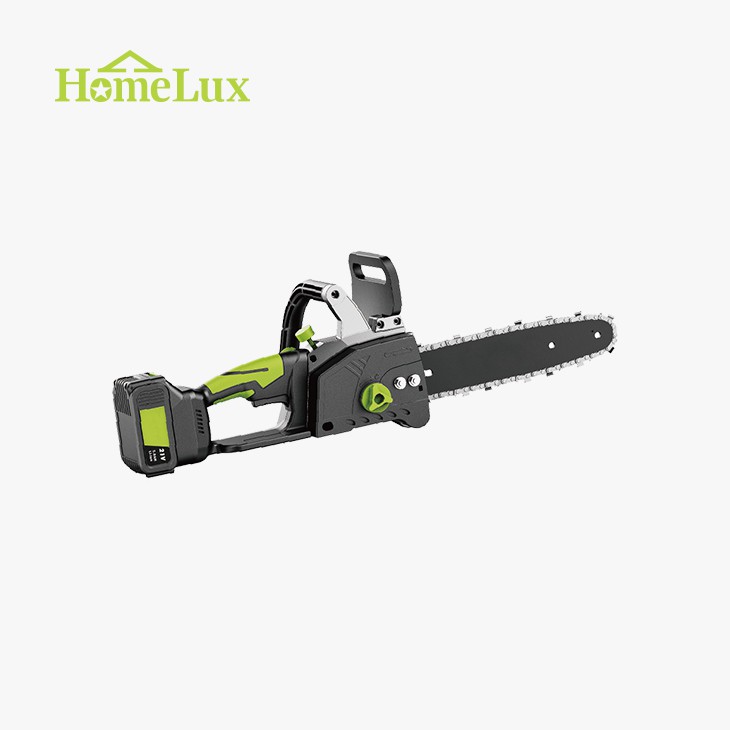

If you're interested in purchasing a cordless chainsaw or have any questions about torque or our product range, we encourage you to reach out to us. Our dedicated sales team is ready to assist you with all your procurement needs and help you find the perfect chainsaw for your projects.
References
- "Power Tools: Principles and Practices" by John Doe
- "Chainsaw Safety and Operation Manual" published by the National Power Tool Association
- Industry research reports on cordless chainsaw technology and performance.


